Subscribe to the newsletter to follow the UNESCO journey, get updates on the nomination, and discover initiatives, testimonials, and content dedicated to the Feast of Saint Agatha.
Menu
Menu
Information and Contacts
For information on the UNESCO application, initiatives, community contributions, and the journey of the Feast of Sant’Agata, contact us: we are at your disposal.
The Feast of Saint Agatha in Catania tells of a living heritage of faith, memory and participation. This site supports the UNESCO nomination process by gathering information, updates, documents and community testimonies, inviting everyone to actively contribute to the knowledge, safeguarding and transmission of the Feast.
The photographic material was provided by: Antonio Parrinello, Fabrizio Villa, and Massimo Vittorio.
Website created by
The Feast of Saint Agatha in Catania is a major community event during which the city renews each year its bond with its Patron Saint
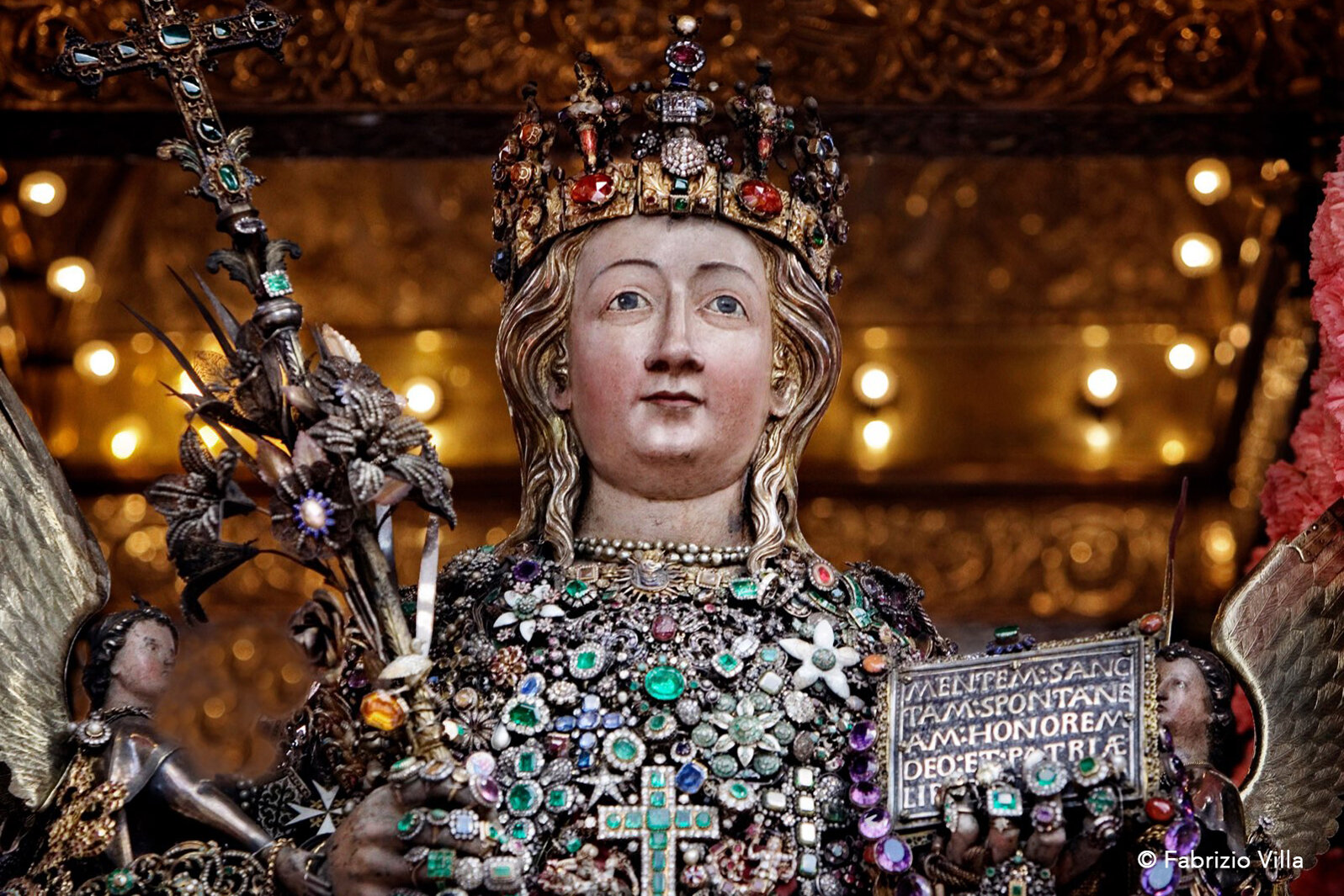
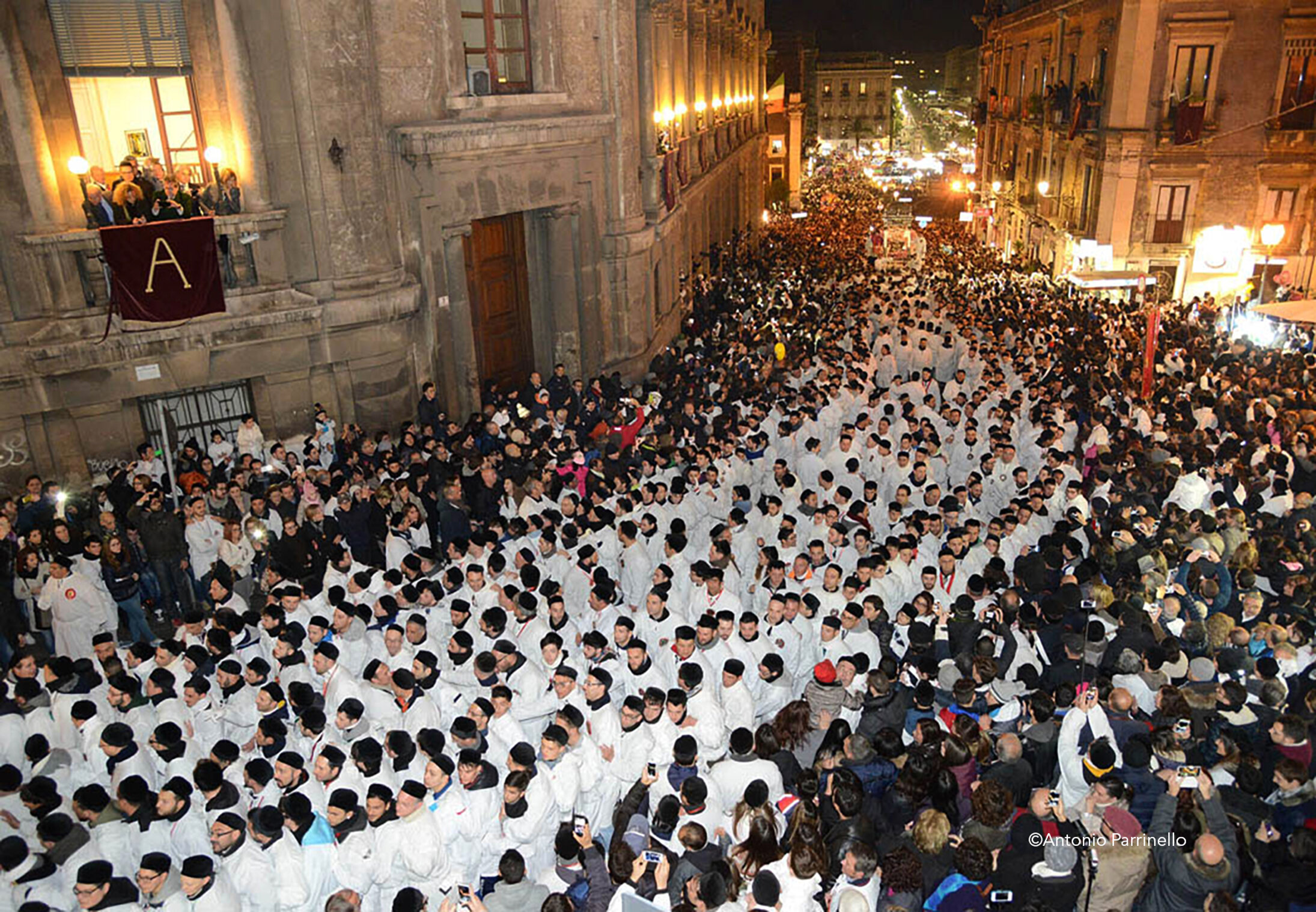
From 3 to 6 February, and again on 17 August, Catania lives a special time: the reliquary bust and the casket with the Saint’s relics cross the city on the silver fercolo, accompanied by devotees in white sackcloth, by the candelore, by music, prayers, and the participation of a large part of the citizenry. The Feast is faith, memory, civic identity, craft know-how, organization, solidarity, and transmission between generations. It is a living heritage, deeply rooted in Catania’s history and able to speak to the world through the universal power of devotion, participation, and belonging.
The Feast
The Feast of Saint Agatha in Catania is the great living story of a city and its Patron Saint.
Every year, in the days of February, Catania gathers around Agatha, a young martyr from Catania, in a celebration that brings together faith, memory, popular participation, civic identity and traditions handed down through the centuries. It is not only a religious anniversary and it is not only a public event: it is a collective experience in which the city recognizes itself, renews its bond with the Saint and passes on to new generations a heritage of gestures, words, sounds, knowledge and values. The Feast takes place mainly from 3 to 6 February; to these moments is added the celebration of 17 August, when Catania recalls the return of the relics of Saint Agatha from Constantinople, said by tradition to have occurred in 1126. The February Feast and the summer anniversary belong to a single civic memory: that of a community which, over the centuries, has safeguarded Agatha’s presence as a sign of protection, belonging and continuity.
During the days of the Feast, the city changes face. The streets and squares of the historic center become places of passage, waiting, prayer and meeting. The Cathedral, the Agatha sites, Via Etnea, Piazza Duomo, Piazza Stesicoro, Via Crociferi, Via Sangiuliano and the other spaces crossed by the procession are not simple urban backdrops: they become living parts of a shared rite. At the heart of the Feast are the reliquary bust of Saint Agatha, the casket with the relics and the fercolo, the precious silver processional carriage that leads the Saint through the city streets. Around these elements an entire community moves: the devotees in the white sack, the bearers of the candelore, the clergy, the institutions, the Agatha associations, the artisans, the musicians, the volunteers, the families, the citizens and the visitors. The Feast of Saint Agatha is a living heritage because it does not belong only to the past. Every year it is prepared, lived, interpreted and passed on. Each generation receives the Feast from the previous one and hands it on to the next, keeping alive a bond that runs through time. For this reason the Feast cannot be understood only by watching it. It must be lived through its stages, shared in the liturgical celebrations, heard in its sounds, followed along its routes, recognized in its gestures, understood in the devotion of those who bear it. It is one of the deepest expressions of the way Catania relives and inhabits its own history.
The community
The Feast of Saint Agatha lives through the community that preserves it.
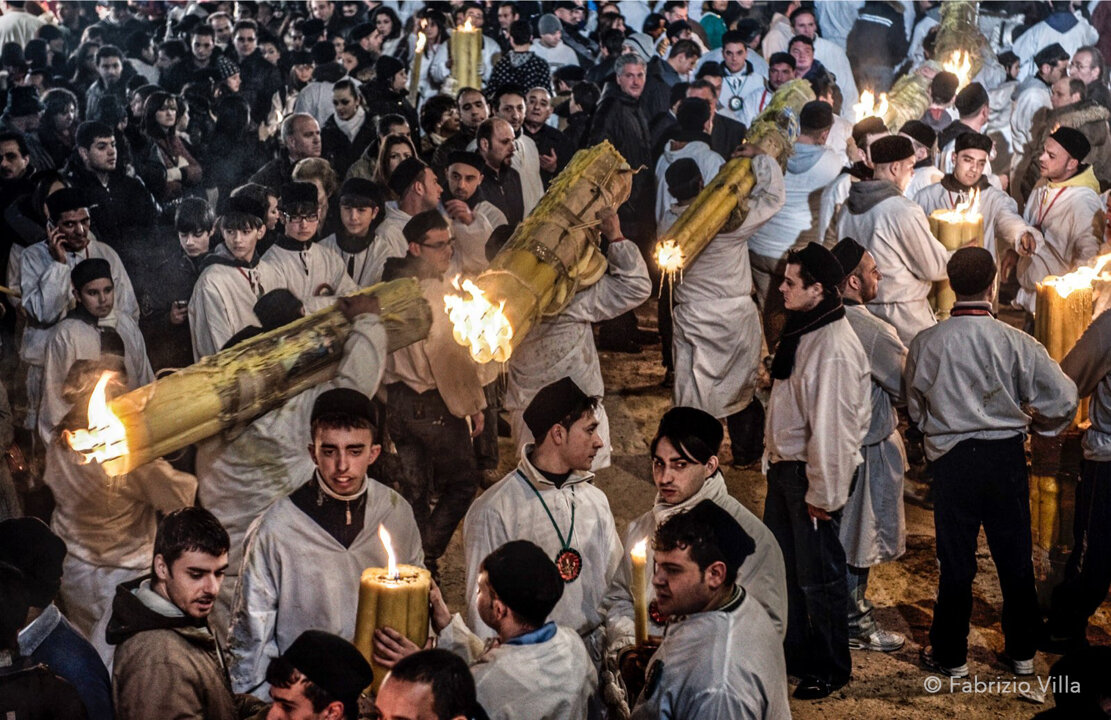
There is no single protagonist of the Feast. Its strength is born of a choral, broad and layered participation, in which each person contributes according to their role, their story and their way of belonging. The devotees, traditionally also called “citizens”, are among the most recognizable presences. They wear the white sack, tied at the waist with a cord, whose color recalls the baptismal garment and is a symbol of the devotee’s will to bind themselves to Agatha, an adamant model of life; the outfit is completed with a black scuzzitta, white gloves and a handkerchief. This clothing is not a stage costume, but a devotional and communal sign. It makes the devotees part of one same collective body, united by faith, promise, memory and participation. The white sack cancels outward distinctions and restores the image of a community that walks together. Whoever wears it becomes an integral part of the Feast: they follow the fercolo, take part in the pulling, accompany the Saint along the route, live the fatigue, the waiting, the song, the prayer, the silence and the invocation. Alongside the devotees are the bearers of the candelore, large processional candles carried on the shoulder; the candelora symbolizes the light that conquers darkness: just as Agatha faced every difficulty thanks to the light of faith, which gave meaning and dispelled the shadows of her story and her martyrdom, so every person who lives the feast of Saint Agatha knows they can overcome life’s obstacles if, by imitating Agatha, they have the courage to commit to renewing and improving themselves and the environments in which they act. Each candelora is tied to the history of the city’s arts and trades, has its own identity, its own memory and its own reference community. Their movement, solemn and rhythmic, opens and accompanies the Feast, making visible the link between devotion, work, craftsmanship and urban history. Protagonists of the feast are also those who work “behind the scenes”: the artisans who care for and restore the structures, the musicians who accompany the ritual moments, the volunteers who contribute to the organization, the Agatha associations that safeguard practices and memories, the ecclesial realities that animate the spiritual dimension, the institutions that ensure the coordination of the Feast, the families who pass on to their children the meaning of the gestures and of belonging.
The Agatha community includes those who live permanently in Catania and those who return to the city for the Feast. It includes those who have always taken part and those who come close for the first time. It includes the young who learn by watching adults and the elderly who, in the days of the Feast, recognize and repeat the gestures received as children.
Rites, times and places
The Feast of Saint Agatha has its own time.
Every year Catania gradually enters the spirit of the celebration. Before the central days there are moments of spiritual preparation, meetings, celebrations, cultural initiatives and organizational activities. The Feast does not begin only when the fercolo with the Saint’s relics leaves the Cathedral: it begins in the waiting, in the preparations, in the care of the displays, in setting up the routes, in the participation of church and civic communities, in the memory that awakens.
THE FEAST
The days of Saint Agatha
A journey through the main moments of the Feast, from the February rituals to the summer remembrance of the return of the relics.
03FebruaryOffering of the wax
February 3rd
The public opening of the Feast
February 3rd marks the public opening of the Feast.
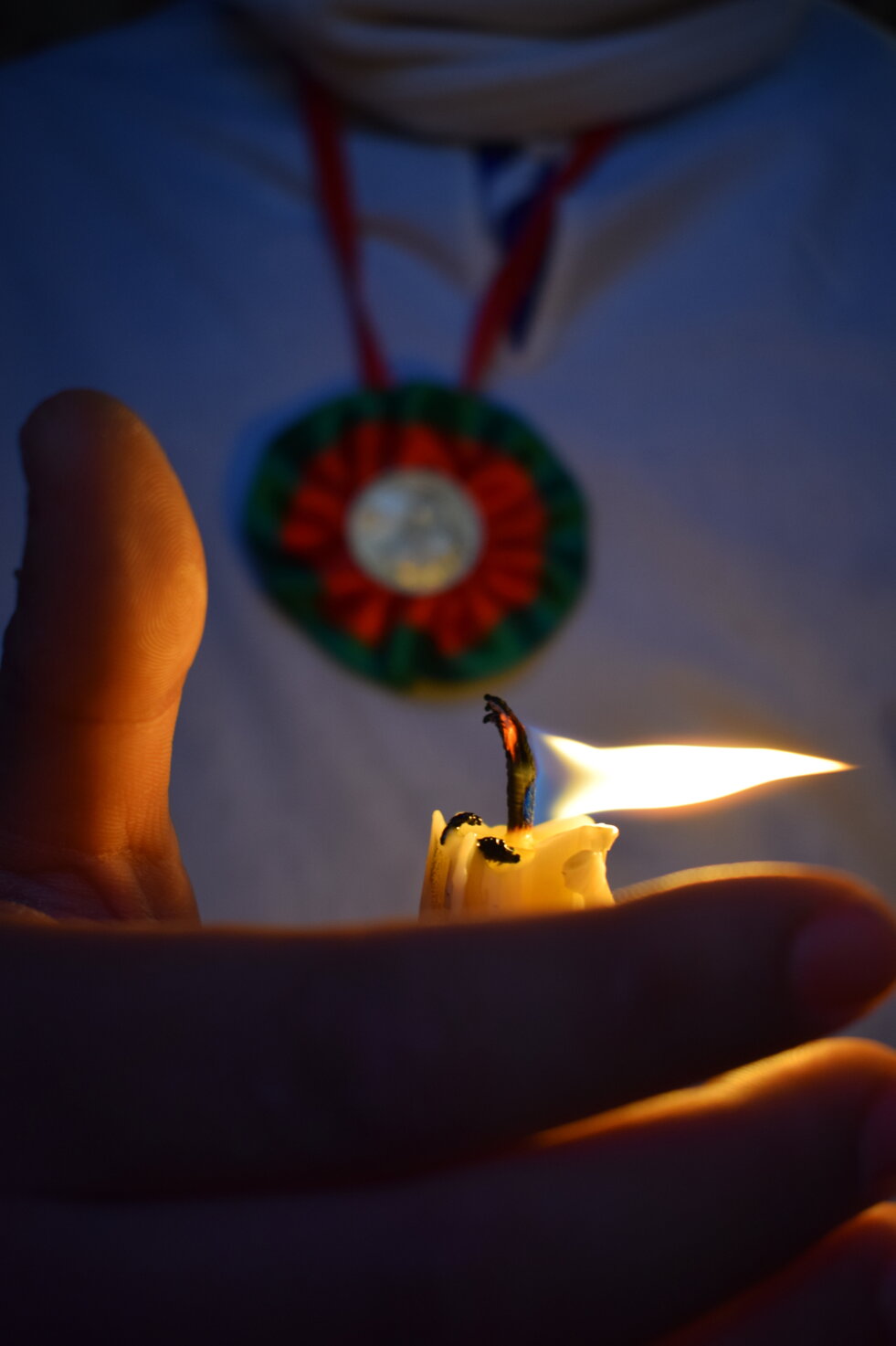
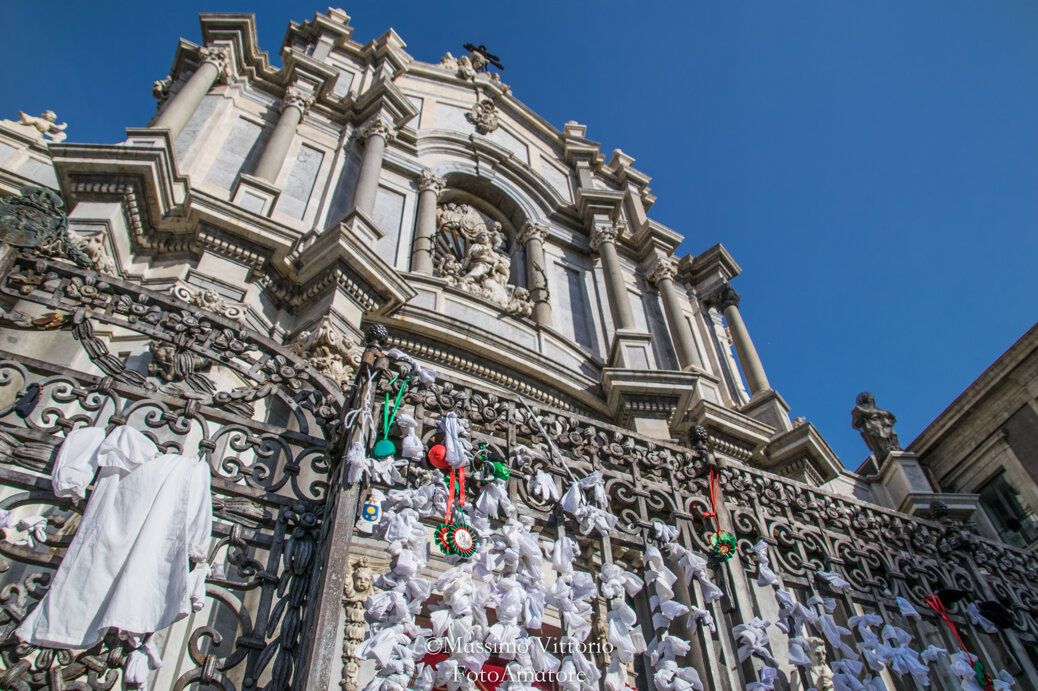
It is the day of the offering of the wax, an ancient and highly symbolic gesture. Wax represents light, prayer, gift and promise. Offering wax means participating in the Feast through a concrete, recognizable and collective sign.
On this day the Candelore parade, religious, civil and military authorities participate, and the city officially enters the time of Saint Agatha. The wax offering procession introduces Catania to the celebration of its Patron Saint and prepares the most awaited moment: the exit from the Cathedral of the fercolo carrying Agatha’s relics.
February 3rd is the day of beginning, transition and shared expectation. The city prepares to meet Saint Agatha.
04FebruaryMass of Dawn
February 4th
The Mass of Dawn and the external procession
On February 4th, at the first light of dawn, the Mass of Dawn is celebrated.
It is one of the most intense and eagerly awaited moments of the Feast. The Cathedral fills with devotees and the faithful; the city awaits the Saint’s procession. Following the service, the reliquary bust and the casket are placed upon the *fercolo* (processional carriage). As the *fercolo* leaves the Cathedral, the bond between Agatha and Catania becomes visible once again in the streets.
Thus begins the outer circuit—the long procession that traverses sites linked to the memory of the martyrdom, the history of devotion to Saint Agatha, and the life of the city.
The outer circuit is a journey of faith and memory. The processional carriage moves along a route that takes the Saint out of the city's monumental heart and leads her toward sites of profound significance to the tradition of Saint Agatha—some of which date back a thousand years.
During the outer procession, the city follows the Saint with a unique intensity. The pace is slow, the participation is physical, and the physical exertion is part of the ritual. Hauling the processional carriage, the pauses, the invocations, the presence of the crowd, and the sheer duration of the route make this one of the most profound days of the Feast.
05FebruarySolemnity
February 5th
The Solemnity of Saint Agatha and the internal procession
February 5th è il giorno della solennità di Sant’Agata.
The city honors the memory of its patron saint and martyr. Solemn celebrations take place in the cathedral, and the processional carriage is prepared once again for the procession. According to tradition, the deep pink flowers of the previous day—associated with the martyrdom—give way to white flowers, symbolizing the Saint's purity.
The inner procession begins in the late afternoon, winding through the historic center and continuing into the early hours of the following day. This is the moment when the bond between the Saint and the heart of the city manifests with particular intensity.
The inner route touches upon key locations in the city's life. The procession winds through streets and squares that are part of Catania’s collective memory. Certain stretches—such as the ascent of Via Sangiuliano—are particularly anticipated and demanding, as they require strength, coordination, experience, and a collective effort.
The night of February 5th is a night of resistance and devotion. The city stays awake. The processional carriage moves forward amidst songs, prayers, moments of silence, lights, anticipation, and invocations: every meter of the route is experienced as part of a shared journey.
06FebruaryReturn
February 6th
The return and the closing of the ritual
When the processional litter returns to the Cathedral, the Festival reaches its ritual fulfillment. The city has accompanied its Saint, renewed its vow, and retraced its own history.
On February 6th, with the return of the *fercolo* (processional carriage) to the Cathedral in the early hours of the morning, the main cycle of the Feast concludes.
It is not merely an ending. The return is a moment of intense emotional and spiritual engagement. After traversing the city, the Saint returns to the place where she is kept. Devotees and the faithful bid farewell to the reliquary bust and the casket, aware that this return marks the close of an extraordinary time and restores the city to ordinary life.
But the Festival does not vanish. It lives on in memories, stories, images, promises, and the anticipation of the coming year.
12FebruaryOctave
February 12th
The day of the Octave
The celebration of Saint Agatha also includes other significant moments.
February 12th, the day of the Octave, concludes the liturgical cycle of February’s celebrations and holds great devotional significance.
On this occasion, the people of Catania have the opportunity to meet the Saint's gaze once again, albeit briefly.
17AugustReturn of the relics
August 17th
The remembrance of the return of the relics
On August 17th, Catania celebrates the return of the relics of Saint Agatha from Constantinople, an event that, according to tradition, took place in 1126.
The summer festival has a different character from the one in February, but it is deeply rooted in the city's devotion.
It commemorates the Saint’s return to her city and renews, in the heart of summer, the bond between Catania and Agatha.
Placesof the FeastCatania città-rito
The places of the Feast
Catania shaped by devotion
The Feast of Saint Agatha does not simply take place “in Catania”: it traverses the city, interprets it, engages it, and transforms it into a single community.
The Cathedral of Saint Agatha is the heart of the Feast. It houses the reliquary bust and the casket, hosts the solemn celebrations, and is the starting and ending point of the procession.
The sites associated with Saint Agatha—including Sant’Agata la Vetere, Sant’Agata al Carcere, and Sant’Agata alla Fornace—preserve the historical memory of her martyrdom, burial, and veneration. During the days of the Feast, the streets and squares traversed by the procession become ritual spaces.
Via Etnea, Piazza Duomo, Piazza Stesicoro, Via Crociferi, Via Sangiuliano, and the other spaces of the historic center are not merely points along the route. They are places recognized by the community—imbued with anticipation, memory, and meaning.
During the Festival, Catania transforms into a city of ritual: every place speaks, every step holds meaning, and every pause reveals a part of the story of Saint Agatha.
Knowledge and practices
Crafts, music, organization, devotion, traditions
The Fercolo
The fercolo is one of the central presences of the Feast. A precious silver processional structure, it holds the reliquary bust and the casket with the relics of Saint Agatha and carries them through the city streets. Its importance is not only artistic. The fercolo is the moving heart of the Feast. Around it the devotees gather, the procession is organized, gazes are directed, and the city’s ожидание and participation are focused. Leading the fercolo requires experience, strength, coordination, and knowledge of the route. Every movement must take into account the crowd, the streets, the slopes, the stops, the ritual timings. It is practical know-how, developed over the years and passed on through direct participation.
The Candelore
The candelore are among the most distinctive elements of the Feast. They are large processional candles, richly decorated, carried on the shoulders by groups of bearers. Their history is tied to the ancient guilds of arts and trades, which in the Feast found a public form of devotion and representation. Each candelora has its own identity. Its weight, its movement, the bearers’ rhythm, the music that accompanies it, the community that supports it and the story it represents all help make it recognizable. The candelore preserve craft knowledge and performative practices. One must know their structure, take care of their upkeep, know how to carry them, know how to control their movement, respect their place in the ceremonial. They are works on the move: they do not stand still in a museum, but live in the Feast and with the Feast.
Music
Music accompanies and supports the feast and every celebration in honor of the Saint. Bands, songs, hymns and prayers help shape the soundscape of the Feast. Each moment has its own mood: the wait for the exit, the passage of the candelore, the procession, the stops, the return. Music is not just a backdrop. It helps the community recognize the times of the rite, strengthens participation, carries the collective emotion and becomes memory. For many Catanese, the Feast is also recognized through its sounds.
Craftsmanship and care of the equipment
The Feast preserves and renews craft skills linked to the care of the candelore, the fercolo, the fittings, the ornaments, the decorations and devotional elements. This know-how requires manual skill, knowledge of materials, respect for tradition and maintenance ability. The Feast also lives thanks to those who work before and after the solemn days, often far from the public eye, so that every element is ready to be returned to the community. Agatine craftsmanship shows how intangible heritage is not separate from objects, but runs through them. What matters is not only the object itself, but the knowledge that makes it, preserves it, uses it and passes it on.
The Organization
The Feast requires complex organizational skills. Coordinating the processions, managing the routes, safety, medical assistance, the presence of volunteers, the relationship between religious and civil authorities, the movement of the candelore, the hauling of the fercolo and the participation of a large crowd require specific expertise. This organization too is part of the Feast’s heritage. It is a collective know-how renewed every year, based on experience, cooperation and knowledge of the places. The Feast is spontaneous in participation, but not improvised in its structure. Its vitality also depends on a network of responsibility, preparation and care.
Devotion
Devotion is the heart of the Feast. It is expressed in many ways: wearing the sack, carrying a candle, offering wax, following the fercolo, taking part in the Dawn Mass, praying in Agatha’s places, accompanying the Saint for hours, invoking her along the route, waiting for her passage, exploring and telling the story of Agatha and the devotion to her. Each devotee carries a personal story: a vow, a gratitude, a request, a family memory, a bond received. Yet, within the Feast, these individual stories become part of a collective voice. Agathine devotion is both intimate and public. It belongs to personal conscience, but finds expression in the city, before others, within a shared rite.
Food Traditions
The Feast also runs through everyday and family life. Some sweet preparations are tied to the memory of Saint Agatha and to the festive period, such as the minne di Sant’Agata (which would recall the torture of the breasts) and the olivette di Sant’Agata (in memory of a story linked to Agatha and handed down in different ways). These traditions do not form the ritual core of the Feast, but they accompany its atmosphere and help pass on Agatha’s memory in homes, in pastry shops, in family stories, and in the life of the city. Through these signs too, the Feast enters daily life and becomes a shared experience.
Info & Contacts
Discover how the journey begins for the Candidacy path